Lead-Acid Battery Recycling
CMSH Waste Management delivers state-of-the-art, enterprise-grade recycling solutions for lead-acid batteries. We ensure full environmental compliance, secure material recovery, and zero-hazard processing tailored to modern industrial requirements across all sectors.
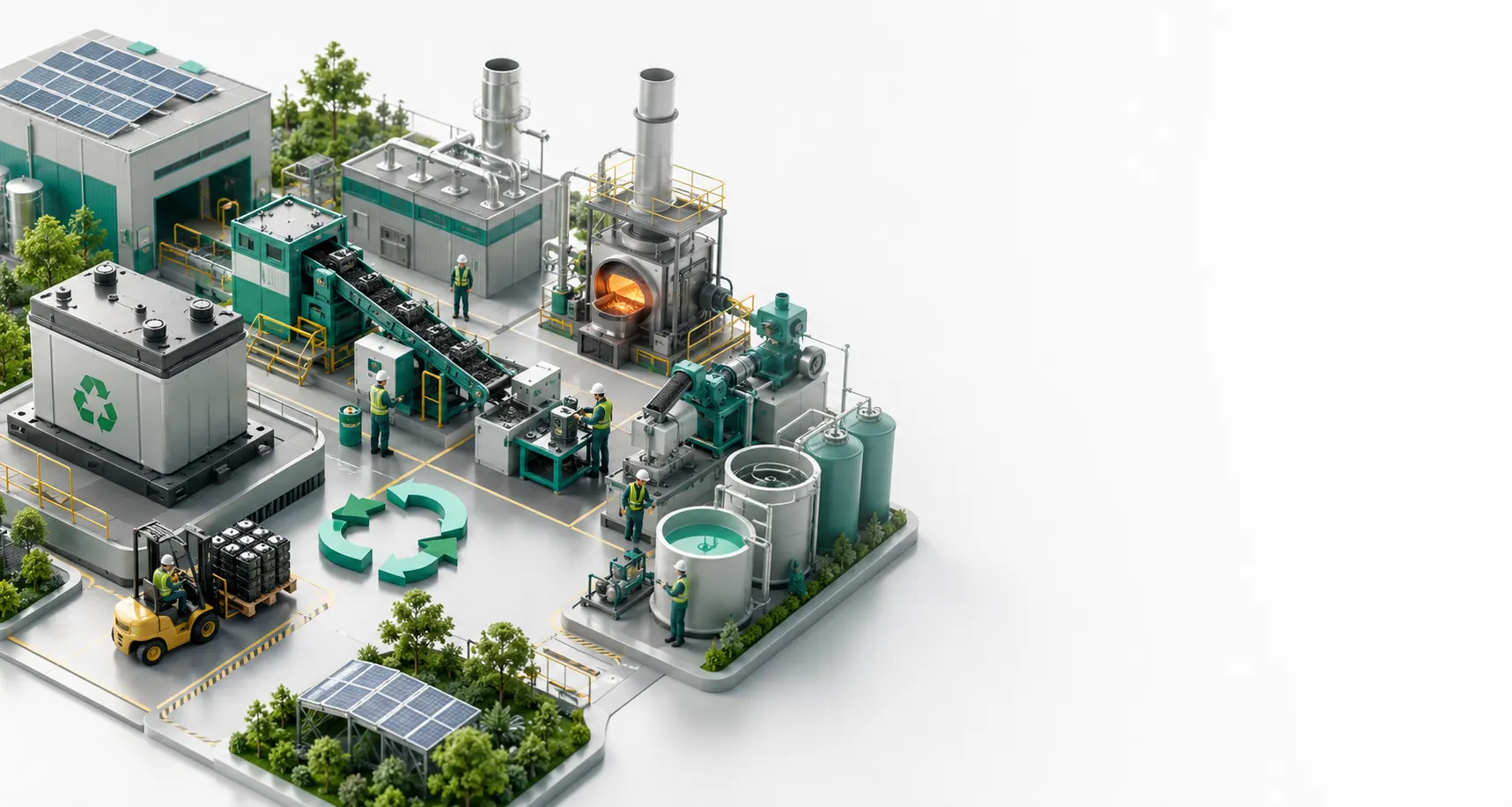
Lead-Acid Battery Recycling Process
Our systematic, multi-stage processing infrastructure guarantees maximum material recovery while maintaining the highest safety and environmental standards.
Collection & Transportation
Secure, compliant transport of spent lead-acid batteries from industrial sites to our authorized processing facilities utilizing specialized, hazard-rated vehicles designed for absolute safety.
Hazard-Rated Logistics StandardsBattery Disassembly
Batteries are safely broken down in controlled industrial crushers, separating plastic casings, metallic grids, and internal components with absolute mechanical precision.
Precision Mechanical SeparationAcid Neutralization
Corrosive sulfuric acid drained during breakdown is safely captured and neutralized through sophisticated chemical treatment plants to fully satisfy environmental norms.
Zero-Discharge Treatment ProtocolLead Recovery
Lead plates and scrap elements are thoroughly cleaned, melted down in high-efficiency smelting furnaces, and refined into high-purity ingots ready for industrial reuse.
Up to 99% Pure Ingot OutputPlastic Recycling
Polypropylene casings are washed, shredded, melted, and pelletized into premium raw plastic material ready for manufacturing brand new battery shells.
Circular Polymer ProcessingLead Sludge Treatment
By-products and residues are stabilized through advanced chemical processing to guarantee zero toxic leakage and full regulatory compliance across operations.
Strict Environmental ComplianceWhy Recycling of Lead-Acid Batteries is Needed
Understanding the critical environmental, economic, and operational drivers behind certified industrial battery recycling.
Lead and sulfuric acid are hazardous materials that can cause severe ecosystem contamination if improperly disposed of. Professional recycling completely prevents toxic leakage into soil and water tables.
Lead-acid batteries are nearly 99% recyclable. Reclaiming high-purity lead and polypropylene reduces the heavy environmental footprint associated with virgin raw material mining and extraction.
Strict global and regional environmental mandates hold enterprises legally accountable for proper e-waste and battery disposal. CMSH ensures end-to-end legal compliance and documentation.
Integrating certified battery recycling into corporate supply chains strengthens circular economy objectives, cutting down greenhouse gas emissions and resource depletion.
Diverting massive volumes of industrial battery waste away from landfills significantly minimizes municipal hazardous waste burdens and promotes clean industrial practices.
Frequently Asked Questions
Find clear answers regarding industrial lead-acid battery lifecycles, safety protocols, and recycling procedures.
Ready to Recycle Your Lead-Acid Batteries Responsibly?
Partner with CMSH Waste Management for safe, compliant and environmentally responsible lead-acid battery recycling services.
Consult Our Experts